What does a logical mileage reading mean?
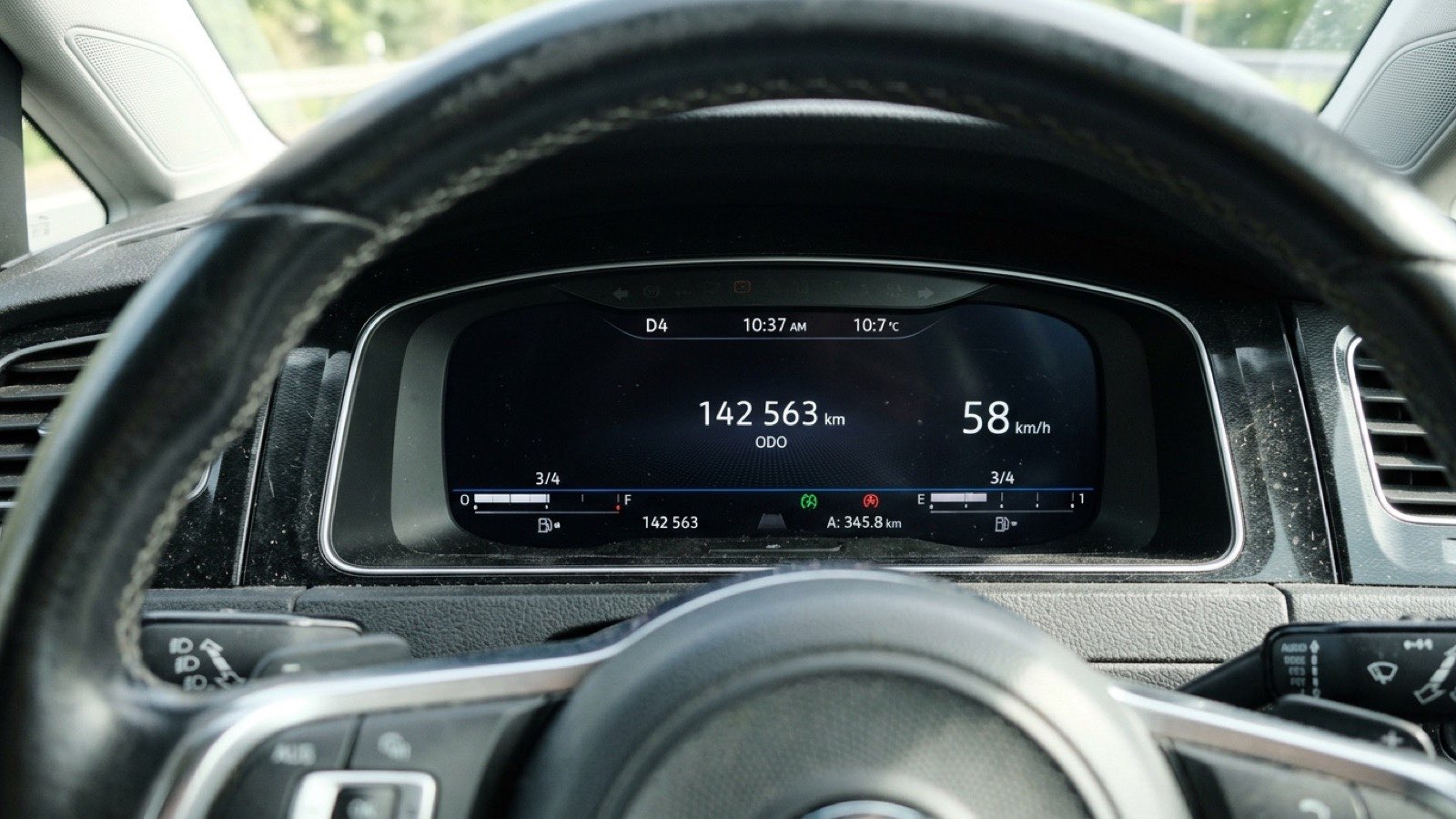
A logical mileage reading means the Dutch vehicle authority RDW sees a higher reading each time a car's mileage is registered than it did the time before. As soon as a lower reading appears in that sequence, the verdict switches to Illogical. More than 30,000 recognised businesses report mileage readings to the vehicle register at legally required moments, including the periodic roadworthiness test (APK), export and servicing, and Belgian and German readings have counted too since 2025 and 2026 respectively. The verdict does not prove every kilometre was recorded correctly: it only covers readings from 1 January 2014 onward, and fraud before the first registration, or between two required moments, stays invisible.
A logical mileage reading means the RDW, the Dutch vehicle authority, sees a higher reading each time a car's mileage is registered than it did the previous time. As soon as a lower reading appears anywhere in that sequence, the RDW's verdict switches to Illogical. The verdict only describes the checked sequence itself. It does not prove every individual kilometre was recorded correctly, and it does not rule out fraud from before the first registration.
Applies to: the Netherlands, for cars carrying a Dutch number plate. Source: RDW, the vehicle register and the mileage registration duty set out in the Besluit voertuigen (Vehicles Decree). Checked: August 2026. Main exception: the verdict only covers readings from 1 January 2014 onward, and it sees nothing that happens between two required registration moments.
Who registers a mileage reading, and when
More than 30,000 RDW-recognised businesses report a car's mileage to the vehicle register, at legally required moments. That happens during the APK roadworthiness test, when equipment such as an LPG installation is fitted, on export, when a plate is transferred to a new owner, when a car enters a dealer's stock, and during repairs, servicing or a tyre change. The reporting duty itself sits in the Besluit voertuigen, chapter 3b: recognised businesses must pass the reading to the Dienst Wegverkeer (RDW) at those moments.
Since 13 January 2025 the RDW has also folded Belgian mileage readings into the vehicle register, and Germany joined on 3 February 2026. For a car that previously ran on Belgian or German plates, the checked sequence therefore reaches back further than the Dutch period alone, though not further than the date that country was connected.
What "Illogical" actually means
Illogical means a reading somewhere in the sequence is lower than the one registered before it. That can be a wound-back odometer, a replaced instrument cluster, or a simple data-entry error by the business that reported the figure. The RDW does not distinguish between those causes: the verdict flags the pattern, not the reason behind it.
On a Plateop report for a car with a Dutch plate, this verdict counts among the most serious signals in the report. When it reads Illogical, the report recommends requesting the full service and inspection history with invoices and having the car independently inspected before going further. That is not excessive caution: an illogical reading undermines every other figure in the report that assumes the mileage is accurate, from the expected wear on service parts to the likely condition of the engine.
When the RDW gives no verdict at all
In several situations the RDW records neither Logical nor Illogical, but No verdict:
- Stichting NAP, the RDW's predecessor for this task, already judged the car Illogical before 2014. The RDW does not carry that older verdict forward, because its own assessment only covers readings from 1 January 2014.
- The car was imported.
- The car was rebuilt and given a new plate.
- The odometer was repaired or replaced.
- The odometer does not count up to 999,999.
- The odometer reached its maximum reading and rolled back to zero.
No verdict is not a clean bill of health. On a Plateop report it does not trigger its own risk signal, that only happens for Illogical, but it does mean there was simply less to check against. That is a different thing from a clean sequence.
What a logical reading does not prove
This is where the verdict reaches its limit. Logical proves that no registered checkpoint recorded a drop, not that every kilometre on the clock was actually driven. Between two required registration moments, an odometer could in theory be wound back and then left to run on normally: as long as the next registered reading still comes out higher than the one before it, the sequence stays formally Logical, even if kilometres quietly went missing along the way.
The same gap applies to the period before the first registration. For an imported car, the checked sequence only starts once the country of origin was connected (Belgium from 2025, Germany from 2026) or, for any other country, once the car is first registered in the Netherlands. Whatever happened before that point never enters the sequence, so it can never produce an Illogical verdict, however large the real difference was.
The RDW says as much itself: you don't see the registered mileage readings themselves through the free check, only the verdict on the sequence. Anyone who wants to see those individual figures can, as the registered owner or holder, request a free RDW-Voertuigrapport (RDW Vehicle Report) using DigiD, eHerkenning, or an RDW certificate. As a buyer, that is of no direct use to you without the seller's cooperation: only the seller can request that report and show it to you.
What this means for a buyer
Treat a Logical verdict as the cheapest, fastest way to rule out the most obvious form of mileage fraud. It was never meant to be a guarantee, and it is not one: it checks one specific pattern in registered data.
When the verdict reads Illogical, digging further stops being optional. Ask for the full service and inspection history with invoices, and have the car independently inspected before any money changes hands. When it reads No verdict, treat the car much like one with no Dutch history at all: ask directly about its country of origin and its earlier maintenance paperwork, because in that case the RDW simply has nothing to check the current reading against. A Plateop report pulls in this mileage verdict automatically as soon as you look up a car on a Dutch plate, along with the explanation behind it. This particular mechanism, a central register collecting mandatory readings, is a Dutch construction: in markets without such a register, Plateop derives a similar verdict itself from a series of previously registered readings, rather than from a register verdict. Check a car on a Dutch plate before you buy at plateop.com.