How do you check a used car before viewing it?
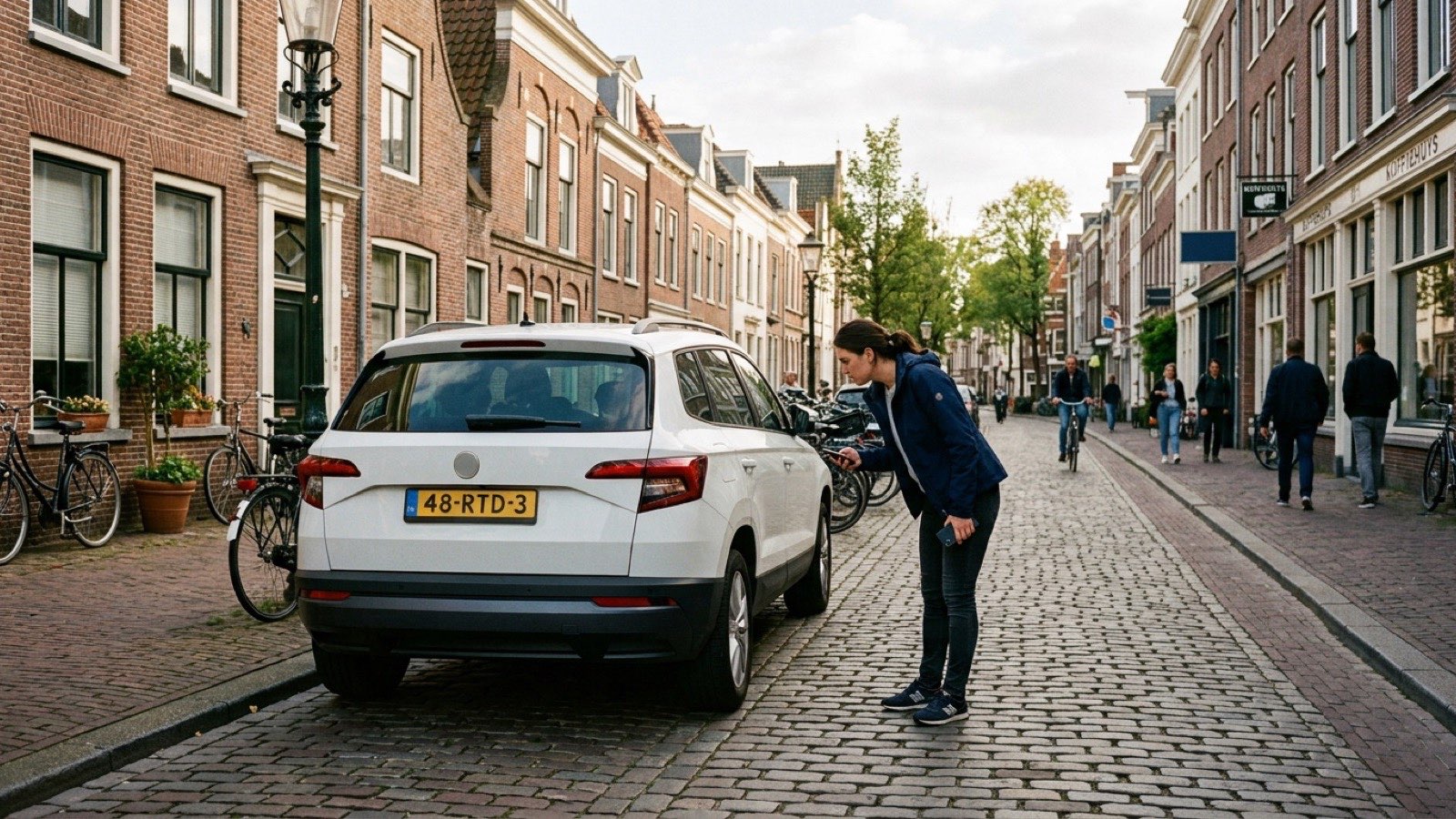
Before you view a used car in the Netherlands, run four checks at home: the registration through the free RDW licence-plate check (odometer verdict, owner count, last registration date, and whether a block is attached), the listing text for what is and isn't included in the asking price, that price against a few comparable listings, and whether you're dealing with a private seller or a business. A registration block, recorded since 1 April 2021, means the car cannot be transferred into your name; you can see that at home on rdw.nl, well before you book a viewing. Together these four checks take about fifteen minutes.
Before you view a used car in the Netherlands, run four checks at home: the registration through the free RDW licence-plate check, the listing text for what is and isn't included in the asking price, that price against a few comparable listings, and whether you're dealing with a private seller or a business. Budget about fifteen minutes for all four. A registration block or an inconsistent odometer verdict, both visible within minutes on rdw.nl, are on their own reason enough to skip a viewing altogether.
Applies to: the Netherlands, RDW vehicle register and Dutch regulation. Source: rdw.nl, rijksoverheid.nl and acm.nl, fetched directly. Checked: August 2026. Main exception: the RDW licence-plate check only records certain things from a given date onward. Odometer readings count from 1 January 2014, registration blocks from 1 April 2021. For anything earlier there's no verdict, and so no guarantee of a clean history either.
The four checks at a glance
| Check | What you do | Where |
|---|---|---|
| Registration | Run the plate check, including the block check | ovi.rdw.nl |
| Listing | Read the price breakdown and warranty wording | the listing itself |
| Asking price | Compare against a few similar listings | Marktplaats, dealer sites |
| Seller | Private individual or business, and does that match the listing | the listing and the conversation |
1. Run the licence plate through the RDW check
Enter the registration number on the free RDW licence-plate check and you get, in the RDW's own words, "general information": owner count, a verdict on the odometer reading, technical and fiscal data, engine and emissions information, and when the registration was last transferred. The owner's name and address never appear; that isn't allowed under privacy law. Save the result and compare it against the listing: do the build year, fuel type and APK expiry date (the Dutch periodic roadworthiness test) match what the seller claims. At the viewing, compare the same data against the registration document and the car itself, as the RDW advises buyers to do.
Run the registration-block check in the same sitting. A creditor can have a car seized, which results in a registration block (tenaamstellingsblokkade): the RDW then refuses to transfer the registration into your name. This has become more common since 1 April 2021, following a change to Dutch seizure and enforcement law, and has been recorded in the vehicle register since that date; a block from before then won't show up. Check for an active block for free on the same RDW check. If one is attached, Dutch government guidance is blunt: it's "not wise to go ahead with the purchase", because you simply cannot get the car transferred into your name, whatever you agree with the seller.
2. Read the listing critically
Under rules the ACM (the Dutch consumer and markets authority) spelled out to the sector in 2018, the price shown in a used-car listing has to include all unavoidable costs; optional cost items have to be marked separately and clearly. The ACM stepped in specifically with car dealers and the data providers and platforms behind listing systems, such as Autotrack, AutoScout24, and Marktplaats, after finding that it was often unclear whether mandatory costs were already in the asking price, and that warranty wording was regularly inaccurate, for instance a car advertised "without warranty" when statutory warranty still applies to a sale by a business regardless. A follow-up check after the mid-May 2018 deadline found broad improvement, and the rule itself hasn't expired since.
Read a listing with those two questions in mind. Does it say explicitly what is and isn't in the asking price, such as making the car road-ready and the registration transfer? If the listing looks like it's from a business, does the warranty wording hold up, or does it say something that shouldn't apply to a professional seller? Also check whether build year, mileage and fuel type match what you just found through the RDW. A mismatch isn't automatically fraud, but it's a reason to ask before you book a viewing. For the broader set of signals in a listing text that point to trouble, see our country-neutral guide Red flags in used-car listings; what to check physically at the viewing itself is covered in The used-car inspection checklist.
3. Compare the asking price
Before you go and look, find two or three listings for the same model, build year and a similar mileage range. An asking price clearly below that range is a reason for extra scrutiny, not a reason to move faster. RDW open data does include a catalogue price (the original new price), but that figure speaks to depreciation since first registration, not to what comparable used cars actually cost today: treat it as background, not as market value. A Plateop report uses this catalogue price together with a depreciation curve as a price indicator for the Dutch market, explicitly labelled "not a market price", precisely so that distinction doesn't get lost. Past fifteen years old, the report stops giving an indication at all, even with a known catalogue price; our guide to assessing the asking price walks through that pricing logic in full.
4. Check the seller
Check whether the listing makes clear whether you're dealing with a private individual or a business, and whether that matches how the seller behaves on the phone or in chat. A private seller behaving like a trader, with several cars listed at once, is a reason to ask more questions. If the plate check from step one showed a registration block, you can skip this step entirely: the sale can't be completed regardless of who the seller is.
If there's no block, keep in mind what happens right after the sale. Dutch government guidance sets out four things you arrange yourself once you've bought the car: transferring the registration into your own name, taking out third-party liability insurance (WA-verzekering), checking when the next APK inspection is due, and paying road tax (motorrijtuigenbelasting) as the new owner. A seller who won't come along to the registration desk, or who pushes for cash instead of a bank transfer, doesn't fit a smooth handover through those four steps.
What this means for the buyer
Run these four checks in this order, and reserve the time-consuming step, the viewing itself, for cars that have already cleared the first two. A registration block, or a listing whose price breakdown doesn't match what you find yourself at the RDW and in comparable listings, doesn't have to cost you a trip: those cars fall away at home. A Plateop report automatically pulls in the available vehicle-register data for a Dutch registration, including the odometer verdict and the price indicator based on catalogue price and depreciation; the owner count is a check you still run yourself on rdw.nl, as described above. Check any car before you buy at plateop.com.
Sources
- RDW, Kentekencheck
- RDW, Kilometerstand controleren
- RDW, Gratis RDW-voertuigrapport aanvragen
- RDW, Tips als u een tweedehands auto gaat kopen
- Rijksoverheid.nl, Wat moet ik regelen als ik een auto ga kopen?
- Rijksoverheid.nl, Hoe controleer ik of er beslag gelegd is op de auto die ik wil kopen?
- ACM, Advertentieprijzen tweedehands auto's moeten duidelijker
- ACM, Advertentieprijzen tweedehands auto's duidelijker na optreden ACM
- ACM ConsuWijzer, Garantie