What questions should you ask a car seller?
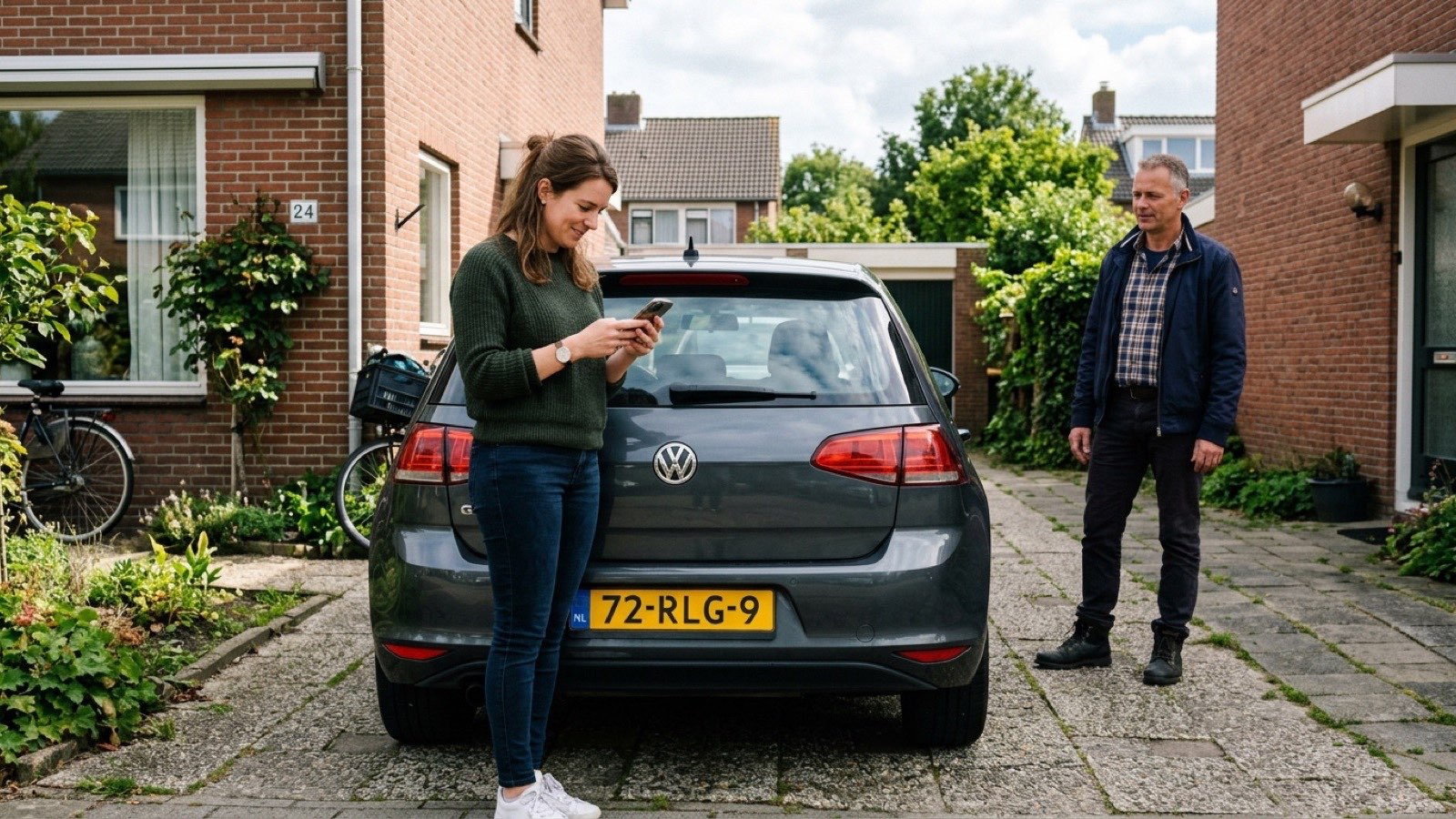
When buying a car in the Netherlands, don't just ask about maintenance and damage: ask about what you can also verify yourself, for free, at the RDW. That's the number of registered owners and the date of the last registration transfer, the official verdict on the odometer reading, whether the registration has ever carried a driving ban, still commonly called WOK status, and whether it carries a registration block. For an imported car, add the foreign registration document, the RDW inspection report and proof of the BPM tax filing. Every one of these points can be checked on rdw.nl before you even view the car, so a seller whose story doesn't match what's on record is a reason to ask more questions.
In the Netherlands you don't have to take a seller's word for everything: several of the key claims can be checked yourself, for free, at the RDW before you even book a viewing. Ask how many owners the car has had and when it last changed hands, ask for the official verdict on the odometer reading, and ask whether the registration has ever carried a driving ban or a registration block, still widely known as WOK status.
For an imported car, add the foreign registration document, the RDW inspection report and the BPM tax filing. This article builds on our general guides to service history and cross-border imports, covering what you can specifically verify through the RDW for a car registered in the Netherlands.
Applies to: the Netherlands (the RDW vehicle registration register) Source: rdw.nl, wetten.overheid.nl and rijksoverheid.nl Checked: August 2026 Main exception: the RDW's odometer verdict only covers readings recorded after 1 January 2014, and returns "no verdict" for, among others, imported cars. A clean verdict is therefore no proof the odometer was never rolled back.
Why this adds to the general guides, rather than replacing them
Our general guides to service history and cross-border imports apply across every market Plateop covers. In the Netherlands there's an extra layer on top, free to consult with nothing but a registration number: the RDW vehicle register. The questions below don't replace those general checklists; they're a Dutch-specific addition, things you can't verify the same way with a seller elsewhere.
Question 1: how many owners has this car had, and when did it last change hands?
The free RDW licence-plate check shows the number of owners and the date a registration was last transferred into someone's name. Compare the seller's answer against what you find on rdw.nl yourself before the viewing. One nuance is worth knowing: that owner count sits on RDW's own web check, but it isn't part of the underlying open data that many automated licence-plate tools pull from. If an automated check omits this figure, that's a gap in the data source, not a warning sign about the car itself. Check it directly on rdw.nl instead.
Question 2: does the mileage match the RDW's odometer verdict?
Since 1 January 2014, the Wegenverkeerswet 1994 (the Dutch Road Traffic Act) has had a dedicated chapter on odometer readings (Chapter IVB): Article 70m specifically prohibits altering a reading so it no longer matches the distance the vehicle has actually covered, and Article 70n sets the legal basis for the registration duty placed on recognised businesses, which is worked out in more detail in the Besluit voertuigen (Vehicles Decree), Chapter 3b, Articles 23j-23k; see our guide on what a logical mileage reading means. Based on the readings on file, the RDW returns one of three verdicts: logical, if each recorded reading is higher than the last; illogical, if a later reading is lower than an earlier one; or no verdict, which applies to, among other cases, imported cars, a replaced odometer, or too few readings since 2014. Ask the seller for this verdict, then check it yourself for free on rdw.nl.
Question 3: what do the periodic inspection (APK) defects say about upkeep?
The service-book question from our general guide still stands, but the Netherlands has a second, independent layer. At every APK inspection, the inspector logs any defects found with the RDW, and those become visible per registration: which defect, and on what date. Whether that defect was a fail point at the time or just a note for later isn't in that open data; only the paper inspection report the owner receives at each APK draws that distinction. So ask not only for the service book, but for those inspection reports themselves. The same defect showing up across more than one inspection, or a pattern of passing right at the deadline every time, is worth raising with the seller directly, separate from whatever the service book itself shows.
Question 4: can I see the full RDW vehicle report?
The odometer verdict is a single line. The full list of every registered reading with its date, what buyers used to request through the Nationale AutoPas (NAP) and what people still commonly call by that name, sits inside the free RDW vehicle report. Only the registered owner or holder can request that report, logging in with DigiD, eHerkenning or an RDW certificate: you cannot pull it for someone else's car. So ask the seller to request it and show it to you, rather than simply asking whether the mileage checks out. If they refuse without a clear reason, treat that as a signal in itself.
Question 5: has this registration ever carried a driving ban?
The RDW can place a ban on using the public road on a vehicle after damage or a technical defect, for example following a collision or a police check: this used to be called WOK status, and that name is still the one most people use in practice. While the ban is active, the car cannot legally be driven on the public road. Only after a passed re-inspection at an RDW test station does the RDW lift the ban from the register, within five working days. You don't even need to ask the seller this one: check it yourself, for free, under "Overview" and then "Vehicle status" on the RDW licence-plate check.
Question 6: does this registration carry a registration block?
A creditor can have a car seized, which results in a registration block (tenaamstellingsblokkade): the RDW then refuses to transfer the registration into your name, whatever you agree with the seller. This kind of block has been recorded in the vehicle register since 1 April 2021. Check it the same way as the driving ban, for free, on the RDW licence-plate check, under "Overview". If a block is attached, you cannot complete the purchase regardless of what you agree with the seller.
For an imported car: ask for the inspection and tax paperwork
If the car is still on a foreign registration, or was imported recently, ask for the foreign registration certificate, any Certificate of Conformity (not compulsory, but it determines the CO2 basis for the BPM tax calculation), the RDW inspection report, and proof the BPM filing was made. For a car from the EU or EEA, a valid foreign periodic inspection can be carried over during the RDW appointment; for a car from outside Europe, the RDW tests it more extensively, usually at its own test centre in Lelystad, and a customs declaration has to be filed first before that inspection appointment can even be booked. Without this paperwork in the current seller's name, the import trail doesn't add up, and that's something to ask about before you make an offer, not after.
What this means for the buyer
For a typical used-car purchase, this takes a few minutes before you book a viewing: enter the registration on rdw.nl and note the owner count, the odometer verdict, and the status shown under "Vehicle status," including any registration block. If what the seller tells you doesn't match the record, ask more questions or walk away. For an imported car, the Certificate of Conformity and the BPM filing are just as verifiable: ask to see the documents themselves, not a promise that everything is in order. A Plateop report already pulls in the odometer verdict, the last registration date, any outstanding recall and the liability insurance status automatically. What you still check yourself on rdw.nl, as above, has a different cause each time: the owner count isn't in the open data the report runs on at all, while a current driving ban does exist as a field there, but the RDW deliberately withholds its value through open data. Check any car before you buy at plateop.com.
Sources
- RDW — RDW-Kentekencheck (licence plate check)
- RDW — Kilometerstand controleren (checking the odometer verdict)
- RDW — Gratis RDW-voertuigrapport aanvragen (free RDW vehicle report)
- RDW — Keuren na verbod voor rijden over de weg (inspection after a driving ban)
- RDW — Terugroepacties opzoeken (recall lookup)
- RDW — Voertuig invoeren vanuit een Europees land (importing a vehicle from within Europe)
- RDW — Auto, motor of brommer van buiten de EU laten goedkeuren (approving a vehicle imported from outside the EU)
- Rijksoverheid — What do I need to import a car from abroad?
- wetten.overheid.nl — Wegenverkeerswet 1994, Chapter IVB Tellerstanden (BWBR0006622)