How do you spot an imported car in the Netherlands?
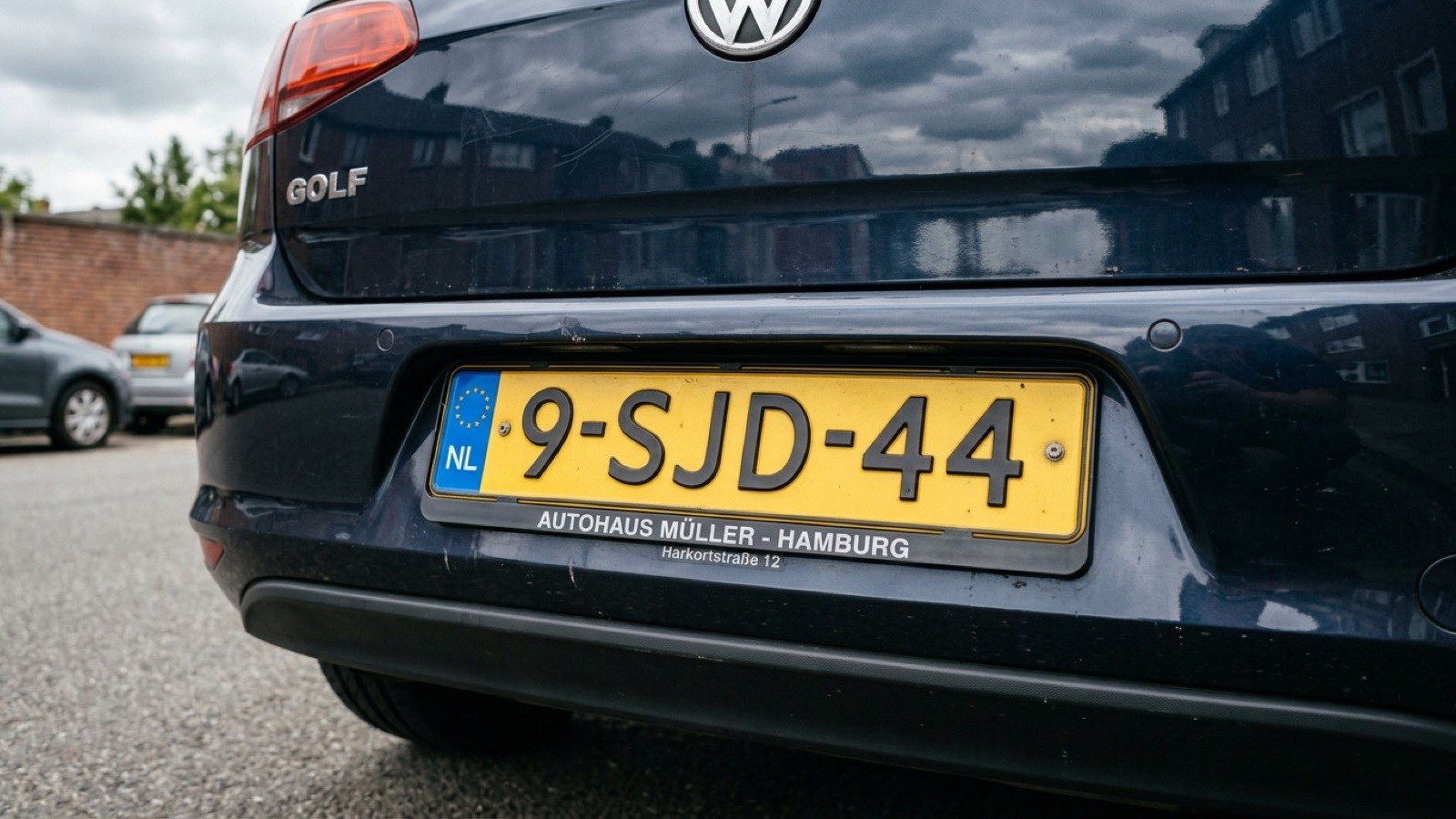
You spot an imported car by comparing two dates held in the RDW's vehicle register: the date of first admission (when the vehicle was first registered anywhere in the world) and the date of first registration in the Netherlands (when it was first put in someone's name here). A wide gap between the two means the car spent time elsewhere first. The RDW doesn't show a plain 'imported: yes' flag anywhere, with one exception: on its odometer check, the RDW lists 'the vehicle is imported' as an explicit reason it can't give a verdict on the mileage, because the foreign mileage history isn't in Dutch systems.
You spot an imported car by comparing two separate fields in the RDW's vehicle register: the date of first admission and the date of first registration in the Netherlands. If the second date sits well after the first, the car spent time somewhere else before it reached the Dutch system. The RDW doesn't attach a plain "imported: yes" flag to a vehicle anywhere, with one exception: on its odometer check, it states "the vehicle is imported" outright as the reason it withholds a mileage verdict.
Applies to: the Netherlands Source: RDW (vehicle register, open data, rdw.nl) and Rijksoverheid.nl Checked: August 2026 Main exception: a gap of a few days to a few weeks between the two dates is usually administrative, not proof of import; if either date is missing, the comparison can't be made
1. Date of first admission: the vehicle's starting point worldwide
The RDW logs a date of first admission for every vehicle, held in open data as the field datum_eerste_toelating. It's the point at which the vehicle was first registered anywhere, not necessarily in the Netherlands. For a car built and first registered in Germany, this date matches that first German registration. If the car only reaches the Netherlands years later, the date stays as it was set in the country of origin. The RDW doesn't reset it to the day the car crosses the border.
2. Date of first registration in the Netherlands: the moment of import
Alongside that, the RDW keeps a second, separate field: date of first registration in the Netherlands (datum_eerste_tenaamstelling_in_nederland). This is the date the vehicle was first put in someone's name in the Dutch register, in other words when it was officially registered here. For a car that has spent its whole life in the Netherlands, the two dates sit close together or match. For an imported car, they don't.
3. Reading the gap between the two dates
Take an example: a car shows a date of first admission of March 2019 and a date of first registration in the Netherlands of November 2023. That car spent over four years somewhere else before it went on a Dutch plate. That multi-year gap is the signal worth acting on. A gap of a few days to a few weeks says little on its own: it can simply mean the car sat with a dealer elsewhere in Europe shortly before Dutch registration, without ever being put in an individual user's name there. The larger the gap in months or years, the more reliable the import signal.
4. Why the RDW doesn't show a plain import flag, bar one place
Across most places where you can pull up a car's data, the free lookup on rdw.nl and the open data itself, there's no separate "imported: yes/no" field. You infer it yourself from the two dates above. There's one place where the RDW does use the word directly: the odometer check. When the RDW withholds a verdict on whether the mileage reading is logical, "the vehicle is imported" is listed as one of the possible reasons, alongside things like a repaired odometer or an earlier "illogical" verdict from Stichting NAP. That's the one spot where the RDW itself, for a specific vehicle, states import as an explanation.
5. Why import calls for extra checks: the odometer as the clearest case
The reason the RDW gives is the problem in miniature: for an imported car, the RDW has, for most countries of origin, no odometer readings from before the Dutch registration, so it can't rule on whether the current reading makes sense. For the two largest sources of Dutch imports that has become more nuanced: since 13 January 2025 the RDW folds Belgian odometer readings into the vehicle register, and German readings joined on 3 February 2026 (see our guide on what a logical odometer reading means). For cars from other countries, and for the period before that connection date, the limitation still applies in full. Service and inspection history run into the same wall in practice. A foreign garage invoice or a foreign roadworthiness test doesn't sit in a Dutch register. A clean Dutch file on an imported car isn't automatically a clean car. It can just as easily mean the Dutch file only starts on the date of first registration in the Netherlands, and everything before that is out of view.
6. What the import process itself does and doesn't cover
Bringing a car in from an EU or EEA country means booking an appointment at an RDW inspection station, bringing the original foreign registration certificate and valid ID, and, once approved, filing a BPM (vehicle registration tax) declaration with the Belastingdienst. Once both the RDW and the Belastingdienst have signed off, the RDW sends a new registration certificate within 5 working days, followed by a letter with the registration code 2 working days after that. That whole process checks the vehicle technically, identifies it, and settles the tax. None of it involves carrying the car's foreign service, damage, or mileage history into a Dutch register. That stays in the country it came from.
What this means for you as a buyer
If you see a wide gap between the two dates, or the listing itself already says "import", ask for the original foreign registration certificate and, for a car from an EU or EEA country, the most recent foreign inspection reports. Ask directly for service invoices from the country of origin too. Don't treat a "no verdict" result on the odometer for such a car as neutral: it's exactly what the RDW itself says it can't see, the foreign history. Compare those two dates before you negotiate further, not after you've already signed.
A Plateop report places the date of first admission and the date of first registration in the Netherlands side by side, where that data is available, so you don't have to look up the import signal in the register yourself. Check any car before you buy it at plateop.com.
Sources
- RDW Open Data — Gekentekende_voertuigen (field names datum_eerste_toelating and datum_eerste_tenaamstelling_in_nederland)
- RDW — Controleer of uw kilometerstand logisch is (odometer verdict tool)
- RDW — Voertuig invoeren vanuit een Europees land (importing a vehicle from an EU/EEA country)
- Rijksoverheid.nl — Hoe kan ik een auto uit het buitenland in Nederland importeren (invoeren)?